BPMN Subprocess vs Call Activity – What’s the Difference and When to Use Which?
Introduction
While designing BPMN workflows, one of the most common and important modeling questions is:
❓ Should I use a Subprocess or a Call Activity?
Although both help organize process logic, they are NOT interchangeable.
Choosing the wrong one can lead to:
Tight coupling
Poor reusability
Difficult maintenance
Unexpected runtime behavior
This blog explains the difference clearly and visually, with:
Definitions
BPMN diagrams
Real-world use cases
Best practices
What Is a BPMN Subprocess?
A Subprocess is a process embedded inside a parent process.
It is part of the same BPMN model
It cannot run independently
It shares the same process instance and variables
🔷 BPMN Subprocess – Diagram
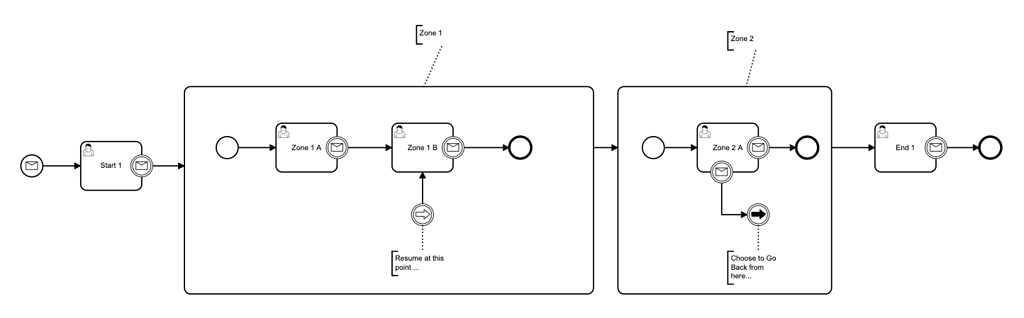
How to read this diagram
The subprocess is inside the parent process
No new process instance is created
All variables are shared automatically
The subprocess ends when the parent ends
Visual identification
Rounded rectangle
Small plus (+) icon if collapsed
When to Use a Subprocess
✔ Logic is local to one process
✔ Steps are tightly coupled
✔ No reuse required
✔ You want readability and grouping
Real Example
Inside an Order Process:
Validate order
Check stock
Calculate discount
👉 These steps are meaningful only inside this process → Subprocess
What Is a BPMN Call Activity?
A Call Activity is used to invoke another BPMN process.
It calls a separate, reusable process
A new child process instance is created
Data is exchanged via explicit input/output mapping
Think of it like a function call in programming.
🔷 BPMN Call Activity – Diagram
How to read this diagram
The Call Activity references another BPMN process
A separate process definition is executed
Variables are mapped in and out
The called process can be reused elsewhere
Visual identification
Rounded rectangle with a thick border
When to Use a Call Activity
✔ Logic must be reused across processes
✔ Clear separation of concerns
✔ Independent versioning required
✔ Cleaner enterprise architecture
Real Example
Reusable processes such as:
Payment processing
Fraud check
KYC verification
Notification sending
👉 Used by multiple workflows → Call Activity
🔍 Visual Comparison (Side by Side)
| Aspect | Subprocess | Call Activity |
|---|---|---|
| Location | Inside parent process | Separate BPMN process |
| Reusability | ❌ No | ✔ Yes |
| Process instance | Single | Parent + Child |
| Variable handling | Automatic | Explicit mapping |
| Versioning | ❌ Not possible | ✔ Possible |
| Coupling | Tight | Loose |
| BPMN Border | Normal | Thick |
Variable Handling (Critical Difference)
Subprocess
Variables are shared automatically
Any change directly affects the parent
Call Activity
Variables must be explicitly mapped
Clean isolation between processes
👉 Call Activity avoids side effects.
Error Handling Differences
Subprocess
Errors bubble up naturally
Boundary events are simple
Call Activity
Errors can be:
Handled inside the called process
Caught via boundary events on Call Activity
Requires explicit modeling (but more control)
Performance Considerations
Subprocess → slightly faster (same instance)
Call Activity → creates a new instance
👉 In real systems, maintainability matters more than micro-performance.
Common Modeling Mistakes (Seen in Production)
❌ Using Subprocess for reusable logic
❌ Using Call Activity for 2–3 simple steps
❌ Forgetting input/output mapping
❌ Over-sharing variables in Subprocess
❌ Deep nesting of Call Activities
Best Practices (Highly Recommended)
✔ Use Subprocess for:
Local, tightly coupled logic
Improving diagram readability
✔ Use Call Activity for:
Reusable business capabilities
Shared enterprise processes
Clean architecture
✔ Always:
Name Call Activities after the called process
Document variable mappings
Keep BPMN readable on one screen
Real-World Recommendation Table
| Scenario | Recommended |
|---|---|
| Order validation steps | Subprocess |
| Payment processing | Call Activity |
| Notification service | Call Activity |
| Internal calculations | Subprocess |
| Compliance / KYC | Call Activity |
Interview Question (Very Common)
Q: How do you visually identify a Call Activity in BPMN?
A: By its thick border, indicating it invokes another process.
Conclusion
Although Subprocess and Call Activity look similar, they solve very different problems:
Subprocess → local, simple, tightly coupled logic
Call Activity → reusable, modular, loosely coupled logic
Choosing the right one results in:
Cleaner BPMN models
Better reuse
Easier maintenance
Fewer production issues
👉 Model BPMN like software architecture, not just flowcharts.
💼 Need Help with Camunda, Jira, or Enterprise Workflows?
I help teams solve real production issues and build scalable systems.
Services I offer:• Camunda & BPMN workflow design and debugging • Jira / Confluence setup and optimization • Java, Spring Boot & microservices architecture • Production issue troubleshooting
🔗 View Services: https://shikhanirankari.blogspot.com/p/professional-services.html
📩 Email: ishikhanirankari@gmail.com | info@realtechnologiesindia.com
✔ Available for quick consulting calls and project-based support✔ Response within 24 hours
🎥 Learn IT with Shikha on YouTube
Prefer learning through videos? Watch practical tutorials on Kafka, Camunda, Alfresco, Java, Spring Boot, Microservices and Enterprise Architecture.▶ Subscribe to Learn IT with Shikha on YouTube


Comments
Post a Comment